
Air Conditioner Condensation Leak, Causes, Fixes, and Prevention in Edmond, OK Homes
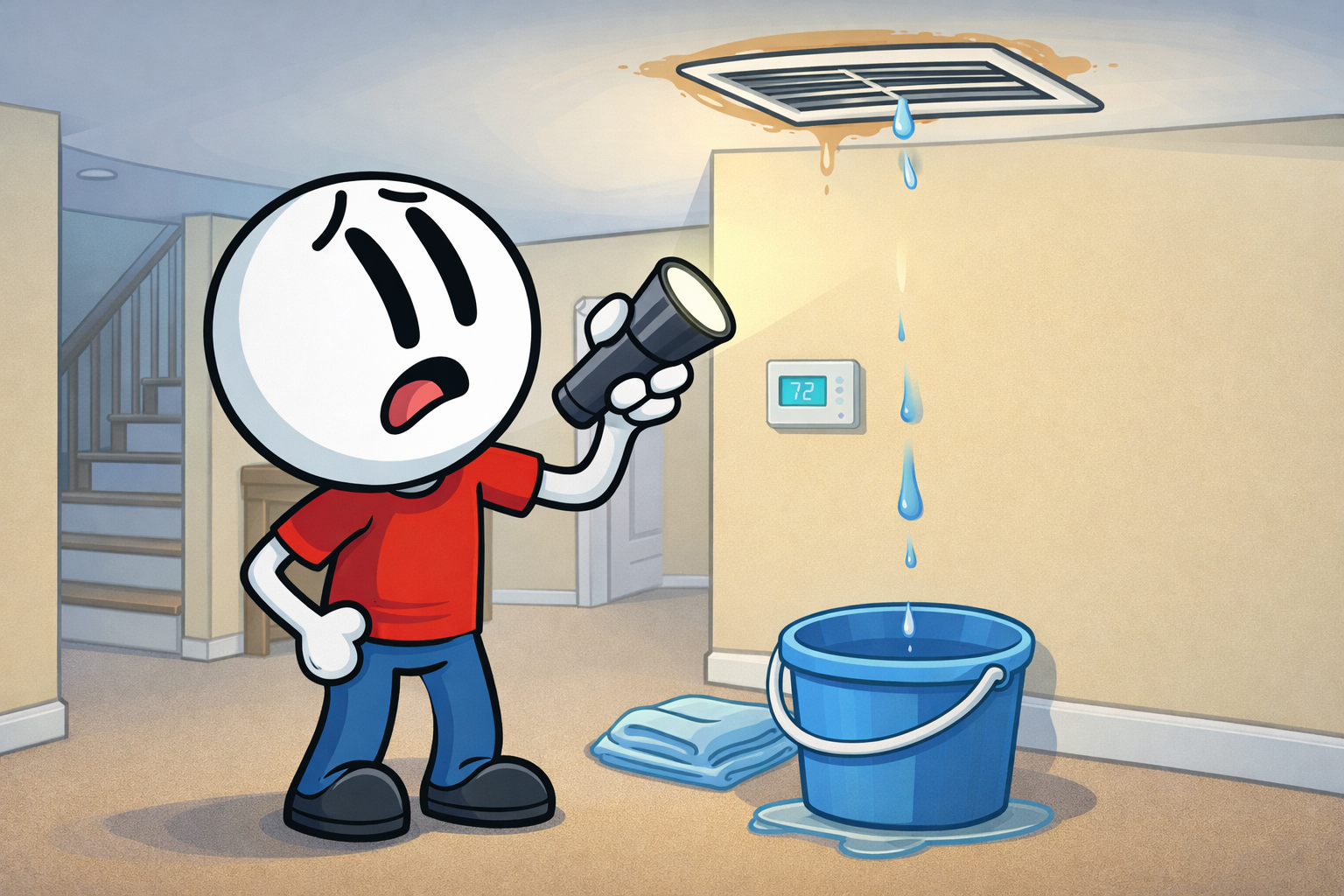
If your ac is leaking water near a vent, closet, or ceiling stain, you have a probable air conditioner condensation leak problem. In Edmond, summers turn those small drips into large drywall repairs quickly.
This article will describe what causes AC condensation leaks, tell you what you should safely inspect for yourself, when to seek help of a professional, and how to prevent them, all tailored specifically toward Edmond, OK homes.
Why AC condensation leaks are so common in Edmond summers
The temperature in Edmond is apparent, but it's the relative humidity that will sneak up on you. Your Air Conditioner (AC) doesn't only make the air cooler; it also removes the moisture from it and this removed moisture has to go somewhere.
The missing information here for many homeowners with an AC is that most AC units can pull between 5 and 20 gallons of moisture from the air each and every day when the air is humid. The moisture pulled by your AC has to be drained. If your drain system is clogged, the excess moisture will flow back into a drip pan, spill over and end up on your ceiling, walls, or floors.
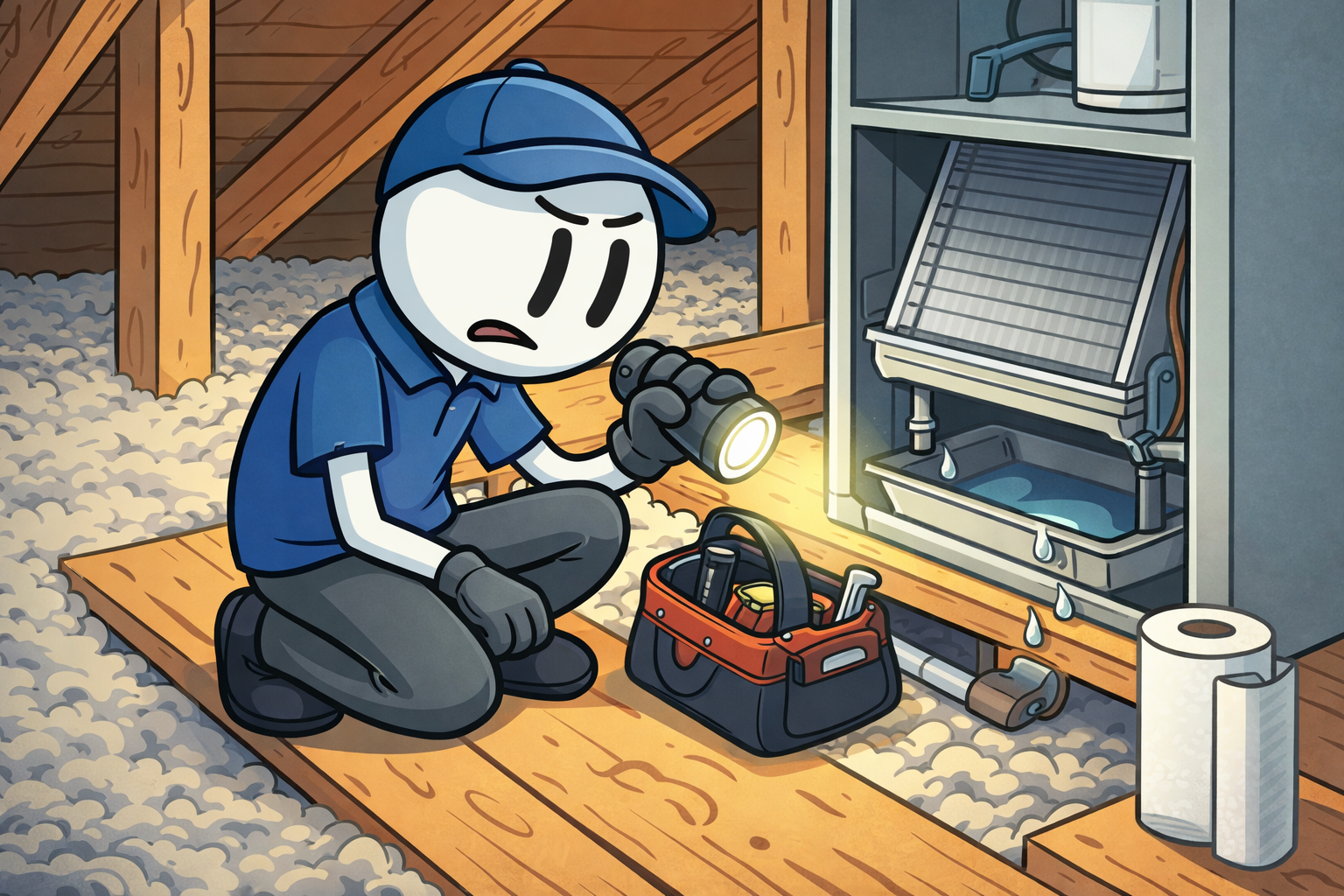
While clogged drain lines are the most common cause of moisture backups into homes, they're not the only one. In addition to clogging, dust, pollen and Oklahoma "red dirt" can all help accelerate the process of clogs forming. The risk associated with attic systems is increased due to the fact that once the leak begins to form in the attic system, damage may occur before the homeowner even sees signs of leakage (such as ceiling stains).
Causes and fixes for an air conditioner condensation leak
1) Clogged condensate drain line (the usual suspect)
What happens: Condensate water is supposed to flow through a drain line (often PVC). Algae, sludge, dust, or debris blocks it. Water backs up and overflows the pan.
What you can do safely:
Turn the system off at the thermostat to stop adding more water.
Check for standing water around the indoor unit area (closet, attic access, garage mechanical room).
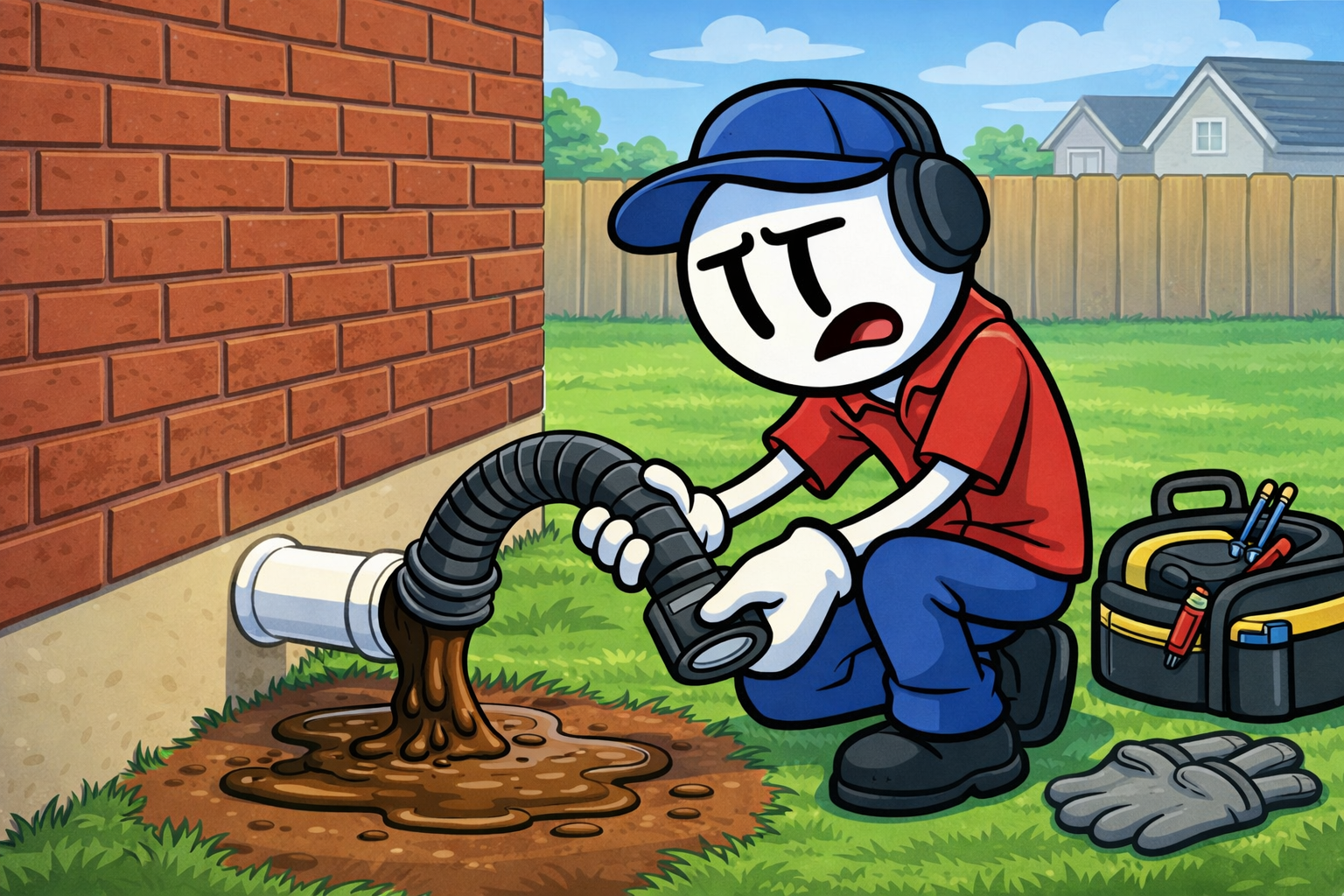
If you can safely reach the drain line termination outside, look for slow dripping, no dripping, or overflow from a secondary outlet.
What a pro will typically do:
Clear the line with proper tools (vacuum, nitrogen, flush).
Check slope, fittings, and trap configuration.
Verify the secondary drain path and safety switch operation.
Good to know: Many “quick fixes” online can be risky if done wrong. If you force a clog deeper or crack a fitting, you create a bigger problem.
2) Dirty air filter, airflow drops, coil freezes, then melts into a flood
What happens: Low airflow can cause the evaporator coil to get too cold and freeze. When it melts, a lot of water hits the pan all at once. If the pan is rusted, cracked, or the drain is slow, you get leaks.
What you can do safely:
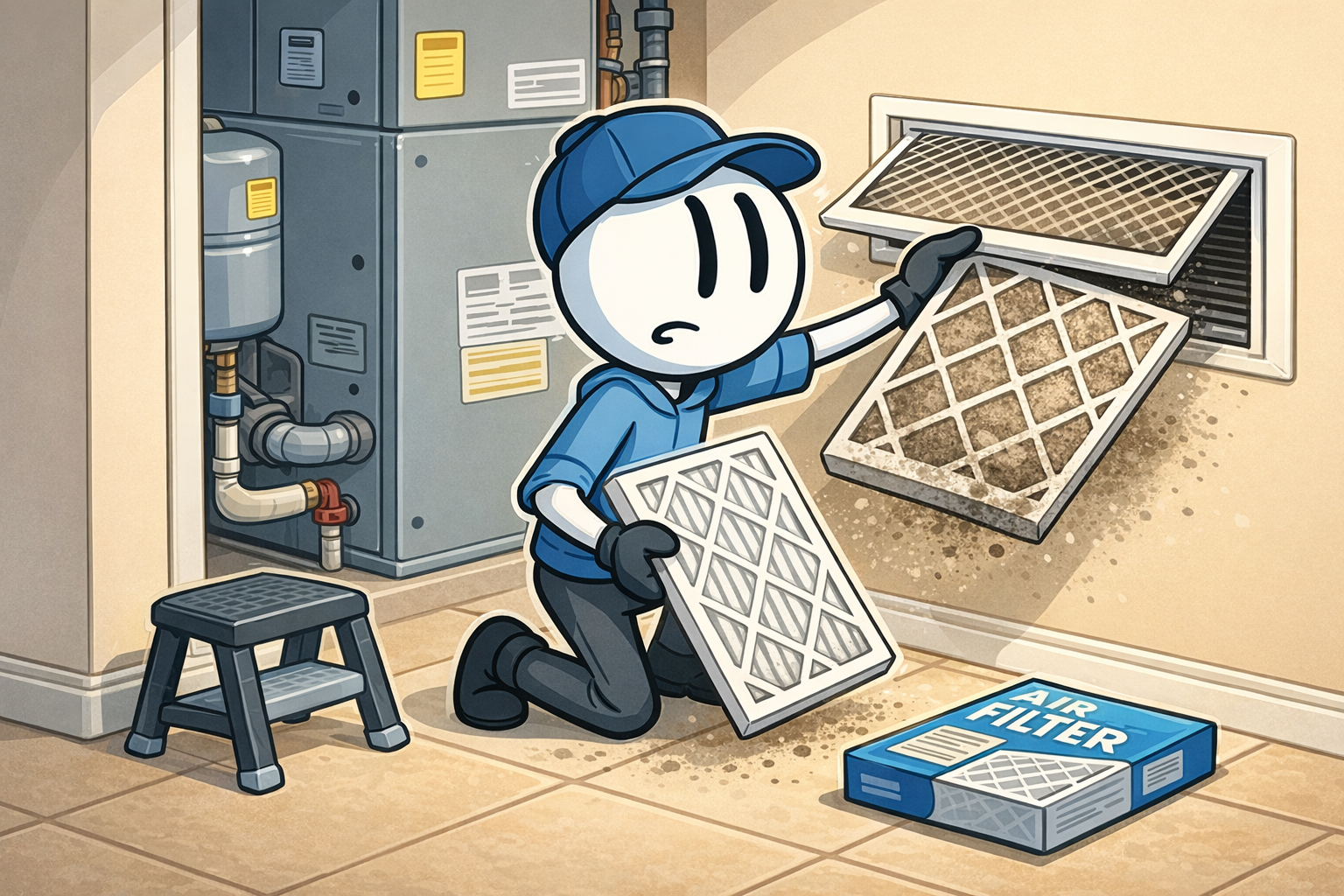
Replace the filter first. If it is visibly dirty, do not wait.
Make sure supply vents are open and not blocked by furniture.
Call a pro if you see:
Ice on refrigerant lines or the coil area.
Weak airflow that does not improve after a filter change.
Repeated leaks after you “fixed the clog.”
3) Rusted or cracked drain pan (especially on older systems)
What happens: The drain pan under the coil can rust through or crack. Even with a clear drain, water leaks from the pan itself.
Signs:
Water appears quickly after the AC runs, even when the drain line is clear.
Rust marks, corrosion, or a musty smell near the indoor unit.
Fix: Pan repair or replacement, sometimes paired with coil service depending on condition and access.
4) Condensate pump failure (common in certain installs)
Some setups use a condensate pump to move water up and out. If that pump fails, water backs up.
Signs:
You hear a pump that runs constantly, or never runs at all.
Water collects around the pump reservoir.
Fix: Pump replacement and a check of the discharge line.
5) Installation or drainage issues (unit not level, poor slope, missing safeguards)
What happens: If the system is not set up to drain properly, water can pool in places it should not.
Pro tip for attic systems: A secondary drain pan and a float switch that shuts the system off before overflow is a smart protection layer for Edmond homes with attic air handlers.
FAQ 1: Should I turn off my AC if it’s leaking water?
Yes. Turn it off to reduce ongoing water production and help prevent electrical issues and ceiling damage.
FAQ 2: Is any dripping water normal?
Some water draining outside can be normal in humid weather, because the AC is removing moisture. Water inside the home is not normal.
Action steps to stop the leak and prevent the next one
Here’s what you can do, in order, without guessing.
Shut the system off
Thermostat to OFF.
If water is actively dripping near electrical components, turn off the HVAC breaker too.
Protect your home
Put a bucket or towels under the leak.
If the leak is in the ceiling, poke a small controlled drain hole in the lowest sag point only if you know what you are doing, otherwise wait for a pro. Drywall can collapse when saturated.
Swap the air filter
A dirty filter is a common trigger for coil freeze and overflow.
If you are unsure on size, match the numbers printed on the old filter.
Check the drain line termination
Outside drain line should typically drip when the AC is running in humid conditions.
If you see nothing, or you see overflow from a secondary outlet, the primary drain may be blocked.
Schedule a tune-up if this is not a one-time event
A professional maintenance visit usually includes drain line clearing, pan inspection, coil check, and safety switch testing. That is exactly the checklist that prevents repeat leaks.
Professional tip: If your indoor unit is in the attic (very common in Edmond), ask about a float switch. It can shut the system down before overflow becomes ceiling damage.
Edmond, OK specific risks and when to call A&T Mechanical
Edmond homes often have attic installations, and that changes the risk profile. A small drain problem can become a ceiling repair because the water is literally above your living space.
Also, Oklahoma summer humidity means your system can produce a lot of condensate in a single day. That makes drain problems show up faster here than in drier regions.
Call A&T Mechanical for ac repair Edmond if you notice any of these:
Water dripping from a ceiling vent, light fixture, or drywall seam
Repeated clogs or repeat leaks after basic steps
Ice on the coil or refrigerant line
A musty smell near the indoor unit
The system shuts off unexpectedly (possible float switch trigger)
If you suspect an air conditioner condensation leak, contact A&T Mechanical to diagnose the cause, clear the drain safely, and prevent repeat water damage in your Edmond home.
Key takeaways for Edmond homeowners
An air conditioner condensation leak often starts with a clogged drain line, but frozen coils, drain pans, pumps, and installation issues also matter.
In Edmond humidity, your AC can remove many gallons of water per day, so drain problems escalate fast.
Turn the system off, protect the area, replace the filter, and check the drain termination.
If the unit is in the attic, safeguards like a float switch can prevent ceiling damage.
If leaks repeat, get a professional inspection, not another “quick fix.”
Written by A&T Mechanical | Updated December 2025